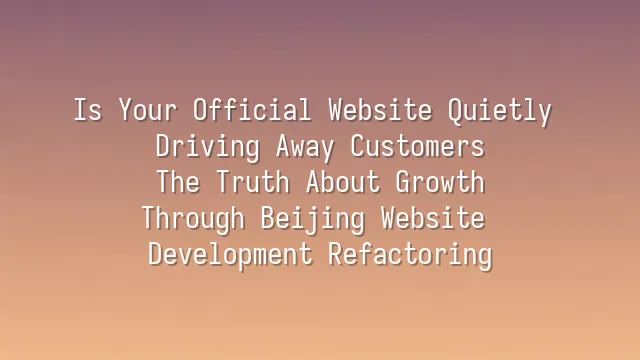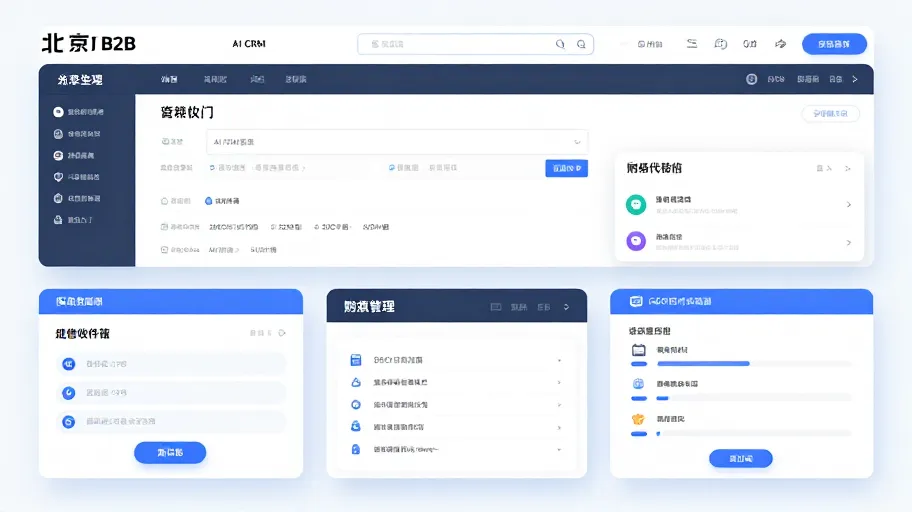
Conclusion First: Not all Beijing B2B enterprises need to implement AI CRM immediately. If your official website is already consistently receiving inquiries but your sales team follows up slowly, leads are frequently lost, and the sources of these leads remain unclear, then an AI CRM is likely worth considering. On the other hand, if your website has very little traffic and almost no form submissions, your priority should be addressing the website and basic lead generation first before discussing CRM implementation. This article provides a straightforward decision-making framework to help you determine whether to proceed now, delay, or not proceed at all.
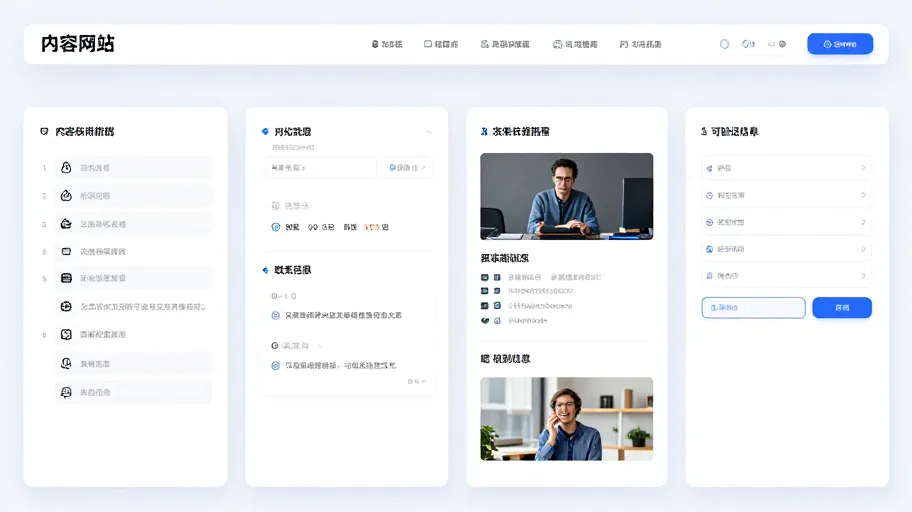
For Beijing-based tech companies, professional service providers, and B2B enterprises, the core of SaaS website development is not merely "creating a visually appealing official website," but rather thoroughly planning the page structure, content persuasion chain, form conversion paths, and post-launch operational mechanisms before going live. This article provides a ready-to-implement judgment framework and checklist to help you clarify your requirements, define acceptance criteria, and establish sustainable post-launch operations prior to engaging with a website development service provider.

A one-hour delay drops conversion rates by 11%—Beijing independent sites are breaking growth stagnation through inquiry automation. From AI identifying customer intent to real-time inventory synchronization via APIs, see how businesses turn nighttime silent traffic into paid orders.
Employees waste 2.5 hours daily searching for information? AI Search Optimization for Beijing Enterprises is breaking down information silos. Through intelligent semantic understanding and vector retrieval, knowledge surfaces proactively, boosting decision-making efficiency by over 60%.

In today's information explosion, finding the right information is more important than 'checking several times.' Beijing enterprises are optimizing and restructuring their knowledge acquisition methods through AI search, achieving a leap from passive response to proactive prediction.

GEO is not a panacea. For Beijing’s hard tech enterprises, it may be the key to breaking the impasse—but only if their data assets are solid and organizational collaboration is robust. If you don’t understand the adaptation conditions, the more you invest, the smaller the echo.

Beijing’s tech enterprises are reshaping decision-making efficiency with geographic information data processing platforms. Decision-making speed improved by 68%, and resource misallocation reduced by over 40%. From logistics to campus management, spatial intelligence is becoming a new engine for growth.

Generative AI is reshaping public perception—but misreferences are quietly eroding brand trust. How can Beijing enterprises take proactive defensive measures? AI Citation Monitoring Services have become the cornerstone of digital strategies, shifting from reactive responses to source-level control.