
In Beijing, content abounds, yet voices remain too faint. Companies publish hundreds of articles, but AI ignores them. The problem isn’t content quality—it’s data silos. We help clients bridge the gap between AI understanding and real-world business data, boosting high-value leads by 47% within three months.
Beijing enterprises are redefining customer conversion with AI. Through intelligent behavior recognition and automated responses, they’ve shortened the sales cycle by 22 days and significantly improved lead conversion efficiency—a revolution driven by data-centric precision operations.

Beijing enterprises are relying on an automated system to make 90-second response times the norm. No more losing high-intent customers, every penny spent on advertising is now traceable. See how they're reimagining the entire journey from form submission to closing deals.
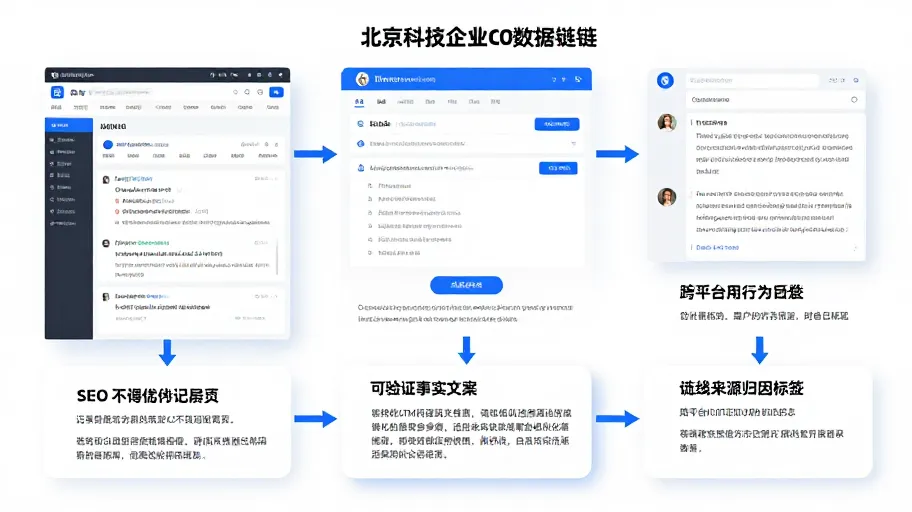
For Beijing-based tech companies, the real challenge of GEO (Generative Engine Optimization) isn't simply "Can AI mention us?" but rather a data-linkage issue: currently, enterprise content assets, website structure, SEO performance, and lead behaviors in AI CRM are likely scattered across different systems and teams. If these data sources remain disconnected, even if AI search boosts brand visibility, businesses still won't be able to determine whether it has generated meaningful leads. This article provides a pragmatic evaluation framework and an execution checklist to help enterprises assess how far they are from achieving a closed-loop process—from visibility to actionable leads.

When expansion hits the urban ceiling, Beijing tech enterprises start replacing gut-feeling decisions with dynamic spatial models. From talent heatmaps to innovation friction, geography is no longer just a map—it’s a core variable in the growth algorithm.

73% of Beijing-based corporate websites become ineffective within six months of going live. The issue isn’t technology—it’s taking the wrong path from day one. This article breaks down real-world website-building logic and reveals which decisions truly determine conversion rates.
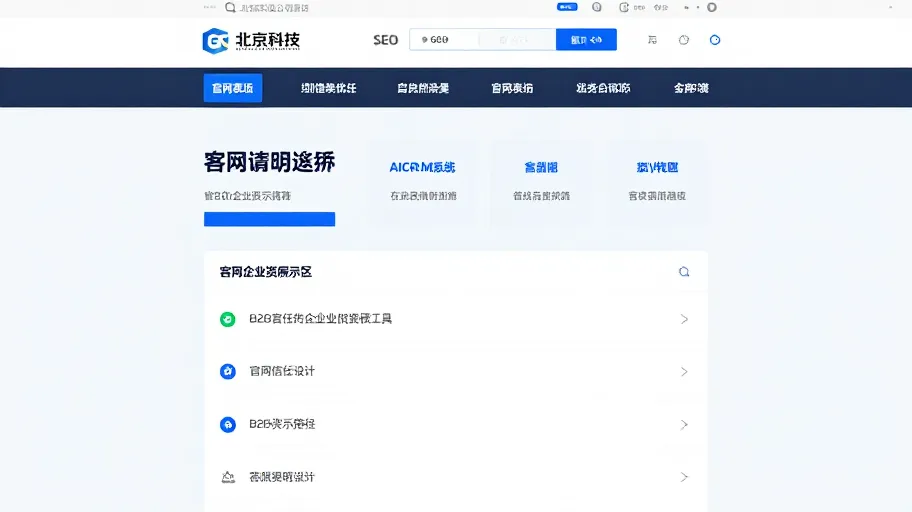
When selecting a service provider for your Beijing technology company's website, the first step is not to compare quotes but to answer three key questions: What business problems does the website aim to solve? How many internal resources can be allocated to support it? And which deliverable items must be explicitly defined in the contract boundaries? The website itself remains a core asset for customer acquisition and trust-building; capabilities such as GEO, SEO, and AI CRM should be evaluated as upgrades on this foundation rather than replacements. This article provides an actionable decision-making framework and checklist to help Beijing-based technology, professional services, and B2B companies make informed choices with clear boundaries.
Beijing’s B2B enterprises have plenty of traffic, but struggle to close deals? The problem isn’t the customers—it’s dormant data. AI CRM is changing the game, turning scattered behavioral signals into actionable, high-value leads and dramatically boosting conversion efficiency.

Choosing the right service provider is key to SaaS project success. By clarifying requirements, setting a reasonable budget, and establishing clear delivery standards, companies can reduce rework rates by over 40%. The real issue is never technology, but collaboration methods.